Hinoki: A Japanese Material Finding Its Place in Global Luxury
Fragrance, texture and the stillness it brings to a space. Hinoki, a cypress native to Japan, is being used in cars, airport lounges and architecture as a form of luxury experienced through the senses.
As the definition of luxury continues to shift, one material has begun to surface quietly at its centre: Hinoki (Japanese cypress)檜A conifer native to Japan. Its fine, stable grain resists water and damp, and it carries a clean, fresh scent. It has long been used for shrines and temples, baths and tubs.See Materials of Japan, a cypress native to Japan.
Rather than asserting value through ornament or visual spectacle, hinoki operates on a subtler register. Its fragrance, its texture, the stillness it brings to a space: luxury, here, is experienced through the senses.
Across the world’s most refined contexts, hinoki is no longer confined to tradition. It is being rediscovered as a material that deepens experience.
Hinoki as Sensory Design in the Automobile
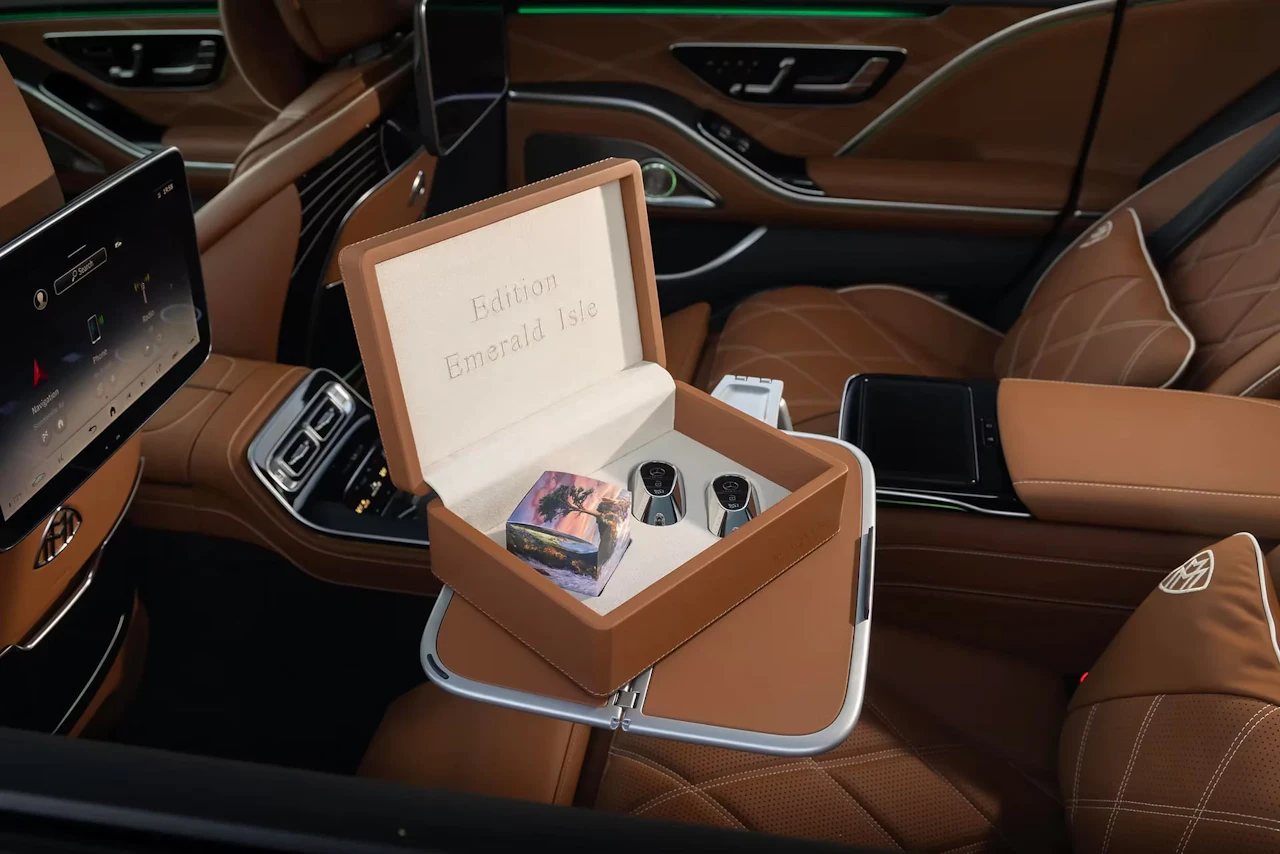
Mercedes-Maybach S680 Edition Emerald Isle
Produced in extremely limited numbers, the Mercedes-Maybach S680 Edition Emerald Isle is defined not only by its materials and craftsmanship, but by the atmosphere of its interior.
Within the cabin, scent is treated with the same intentionality as leather or wood trim. A bespoke fragrance incorporating hinoki introduces a quiet, woody depth to the space.
The aroma does not dominate. Instead, it settles gently into the cabin, lending calm and composure to the journey.
In this context, hinoki functions not as a cultural reference, but as a universal sensory language, one that transforms movement into a private, contemplative experience.
A Subtle Presence in a Transitional Space
JAL First Class Lounge
Airports are spaces of constant motion and heightened tension. Within a first class lounge, however, a different rhythm emerges.
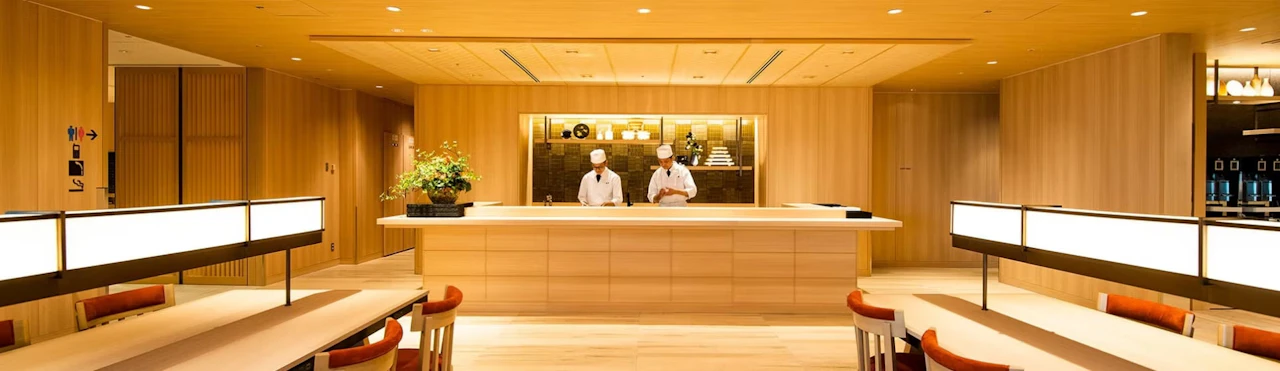
Here, the presence of hinoki is barely perceptible at first. A faint fragrance lingers in the air, noticed more by the body than the mind.
It is not an overt expression of identity, nor a decorative gesture. Rather, scent becomes part of the environment itself, designed to ease the transition between departure and arrival.
By allowing fragrance to shift with time and season, the space remains fluid, alive and quietly restorative.
Hinoki at the Core of the Stay Experience
NOT A HOTEL “NIGO HOUSE”
In architecture and hospitality, hinoki reveals its presence more directly.
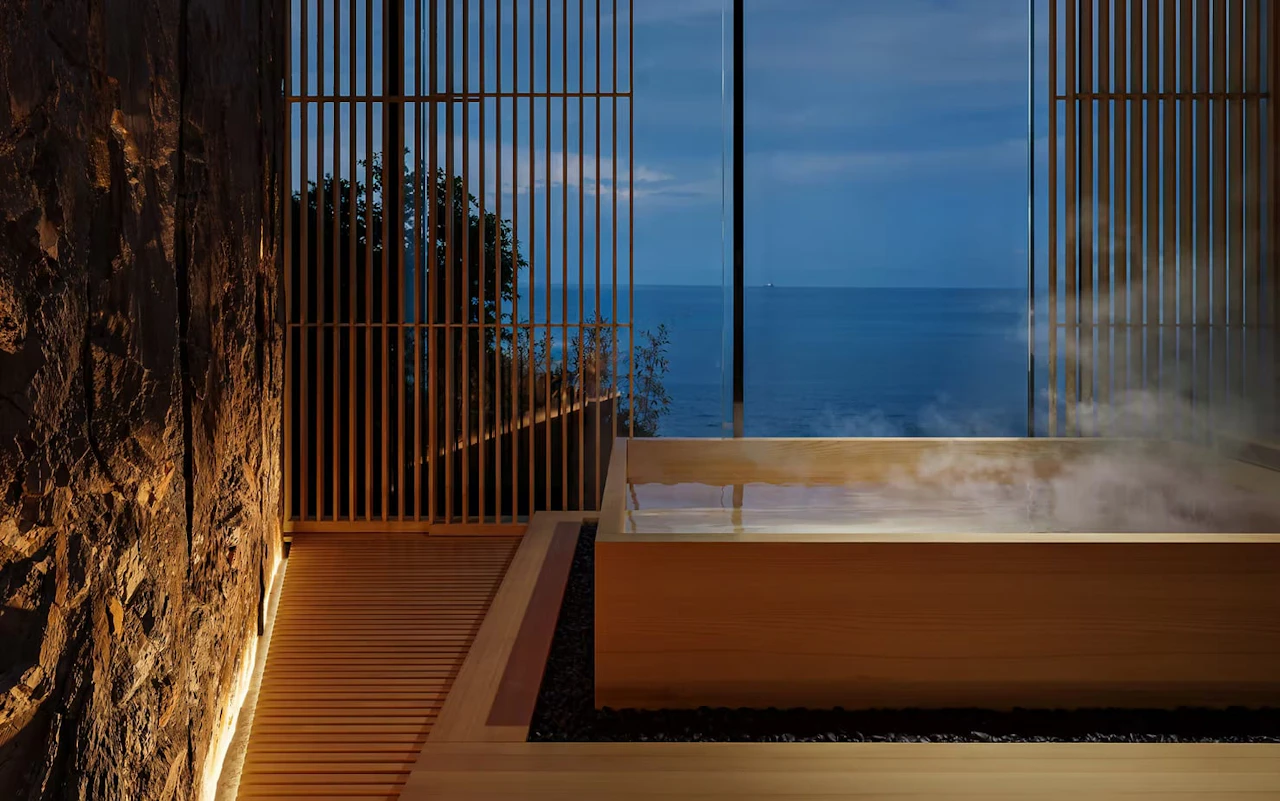
At NIGO HOUSE, part of the NOT A HOTEL project, a hinoki bath anchors the bathing space. Set against expansive views of sea and cliff, the room brings together raw nature and meticulous craftsmanship.
Steam carries the scent of wood. The warmth of the material meets the skin. Time itself seems to slow.
Here, hinoki is not an aesthetic reference. It is integral to the experience of wellness, a material that shapes how the body rests, recovers and reconnects.
When a Local Material Meets a Global Sensibility
Automobiles. Airports. Architecture.
Across these disparate contexts, hinoki appears with a shared role: to deepen experience without insisting on presence.
It does not seek attention. It does not require explanation. Instead, it merges quietly with space and time, elevating both.
Hinoki is no longer only a traditional Japanese material. It is becoming a language of contemporary luxury, understood not through sight, but through feeling.
Quiet. Measured. And unmistakably present.